 Skip to content
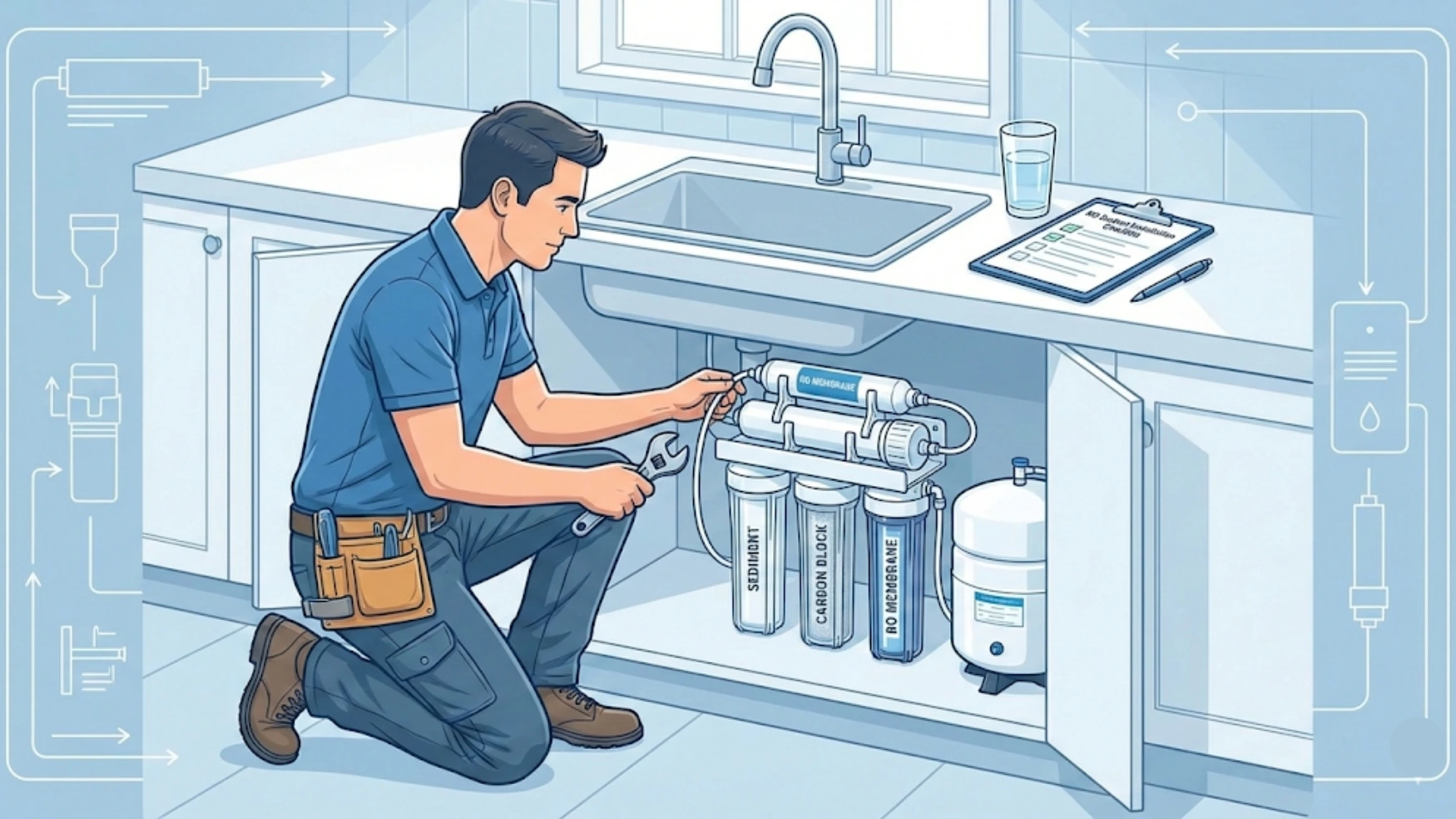
RO System Installation Checklist for Perfect Setup
Introduction to RO System Installation
RO system installation is not merely a mechanical task; it is a precision-driven process that determines the purity, taste, and safety of drinking water. A carefully executed setup ensures optimal filtration, reduced wastage, and extended system longevity.
Understanding Reverse Osmosis Technology
Reverse osmosis operates by forcing water through a semi-permeable membrane that eliminates dissolved salts, heavy metals, bacteria, and chemical contaminants. This molecular-level filtration demands accurate pressure, alignment, and component integrity.
Importance of a Proper Installation Checklist
An installation checklist acts as a safeguard against oversight. It standardizes the process, minimizes performance inefficiencies, and prevents premature system failure caused by improper sequencing or loose connections.
Common Mistakes Made During RO System Installation
Neglecting water pressure limits, misplacing membranes, or skipping system flushing are frequent errors. Such lapses often lead to reduced flow rates, membrane fouling, and persistent reverse osmosis problems.
Site Assessment Before Installation
Space Requirements
Adequate space allows for proper airflow, easy maintenance, and future filter replacements without disruption.
Environmental Conditions
Avoid direct sunlight, excessive heat, or damp surroundings that may degrade system components over time.
Evaluating Source Water Quality
Testing Total Dissolved Solids (TDS), hardness, and microbial presence is essential. Accurate assessment determines pre-filter selection and membrane capacity.
Required Tools and Accessories
Standard tools include TDS meters, pressure gauges, pipe cutters, Teflon tape, and adjustable spanners. Using proper equipment ensures leak-free and stable installation.
Selecting the Right RO System for Your Needs
Residential, commercial, and industrial applications require different output capacities. System selection should align with daily consumption and inlet water composition.
Pre-Installation Safety Precautions
Disconnect power sources and close inlet valves before installation. Safety compliance prevents electrical hazards and water damage.
Inlet Water Pressure Assessment
RO systems function optimally within defined pressure ranges. Low pressure reduces efficiency, while excessive pressure can rupture membranes.
Installation of Pre-Filtration Units
Sediment and carbon filters must be installed correctly to protect the RO membrane from particulate clogging and chlorine degradation.
RO Membrane Placement and Handling
Handle membranes with clean hands and avoid surface contact. Proper seating prevents bypass flow and ensures effective contaminant rejection.
Post-Filtration and Mineral Cartridge Setup
Post-filters enhance taste, while mineral cartridges rebalance essential elements, improving water palatability and health benefits.
Plumbing Connections and Pipe Alignment
Ensure precise alignment of inlet, outlet, and drain lines. Poor routing causes backpressure and leakage.
Electrical Connections and Pump Configuration
Secure wiring and correct voltage matching stabilize pump operation, ensuring consistent filtration output.
Drain Line Installation and Flow Control
A properly installed drain line regulates brine discharge and maintains membrane efficiency.
Initial System Flushing Process
Flushing removes carbon residue and preservatives. Skipping this step compromises water clarity and taste.
Testing Water Quality After Installation
Measure TDS levels and flow rate. Results should align with manufacturer specifications to confirm installation accuracy.
Identifying Reverse Osmosis Problems and Solutions
Low pressure, unusual taste, or slow flow indicate issues. Timely diagnosis and corrective solutions restore system efficiency.
Routine Maintenance Tips – Post Installation
Regular replacement of filters as well as cleaning of the membranes prevent performance decline or the growth of microorganisms.
Providing long-term performance and efficiency
Continuous monitoring, pressure checks, and periodic servicing are being used to maintain the qualities.
Final Inspection and Operation Checklist
Before putting into service, it is essential to ensure that there is no leakage in connections, there is proper pressure, it is safely
Conclusion: Achieving a Perfect RO Setup
A systematic installation process for a RO system turns mazy filter systems into a reliable water treatment solution. Precision, discipline, and awareness about maintenance bring about a complete, safe, and long-lasting performance.
Frequently Asked Questions (FAQs)
Q1. Why is proper RO system installation important?
Proper RO system installation ensures effective removal of contaminants, better water taste, reduced water wastage, and longer system life. Incorrect installation can lead to poor filtration performance and frequent breakdowns.
Q2. How does reverse osmosis technology work?
Reverse osmosis purifies water by pushing it through a semi-permeable membrane that removes dissolved salts, heavy metals, bacteria, and chemical impurities at a molecular level.
Q3. What is the purpose of an RO system installation checklist?
An installation checklist helps standardize the setup process, avoid common mistakes, improve efficiency, and prevent premature system failure caused by incorrect sequencing or loose connections.
Q4. What are common mistakes during RO system installation?
Common mistakes include ignoring water pressure limits, incorrect membrane placement, improper plumbing connections, and skipping the initial flushing process.
Q5. How much space is required for installing an RO system?
Adequate space is needed for proper airflow, easy access for maintenance, and smooth filter replacement without disturbing the system or surrounding area.
Q6. Can environmental conditions affect RO system performance?
Yes. Excessive heat, direct sunlight, or damp environments can damage system components and reduce overall efficiency and lifespan.
Q7. Why should source water quality be tested before installation?
Testing TDS, hardness, and microbial levels helps select the correct filters and membrane capacity, ensuring optimal purification and system compatibility.
Q8. What tools are required for RO system installation?
Essential tools include a TDS meter, pressure gauge, pipe cutter, Teflon tape, and adjustable spanners to ensure secure, leak-free installation.
Q9. How do I choose the right RO system for my needs?
The right system depends on daily water consumption, source water quality, and whether the application is residential, commercial, or industrial.
Q10. What safety precautions should be taken before installation?
Power supply should be disconnected and inlet water valves closed to prevent electrical hazards, leaks, and accidental damage.


Leave A Comment