 Skip to content
What Are the 5 Methods of Water Treatment Solution?
Water quality plays a crucial role in human health, industrial operations, and environmental sustainability. With increasing pollution, chemical contamination, and water scarcity, adopting a reliable water treatment solution has become essential. Water treatment methods are designed to remove impurities, harmful microorganisms, and dissolved contaminants to make water safe for drinking and usage.
Understanding the different methods used in the drinking water treatment process helps households, businesses, and industries choose the right technology. At theroplant, we provide advanced water treatment plants and services that deliver long-term clean and safe water solutions for residential, commercial, and industrial needs.
Water Treatment Solution: Why It Is Essential
A water treatment solution ensures that raw water from natural or municipal sources is purified before use. Untreated water may contain bacteria, viruses, heavy metals, chemicals, and suspended solids that pose serious health risks.
Importance of Water Treatment
Health Protection
Prevents waterborne diseases caused by bacteria, viruses, and parasites.
Improved Water Quality
Enhances taste, clarity, and odor of water.
Equipment and Appliance Safety
Reduces scaling and corrosion in pipelines, boilers, and appliances.
Environmental Sustainability
Promotes efficient water usage and reduces plastic waste from bottled water.
Method 1: Coagulation and Flocculation in Water Treatment Solution
Coagulation and flocculation are the first steps in many water treatment systems and play a vital role in removing suspended particles.
How Coagulation and Flocculation Work
Chemical Addition
Coagulants such as alum or iron salts are added to water to neutralize particle charges.
Formation of Flocs
Small particles combine to form larger clumps called flocs, making them easier to remove.
This method improves the effectiveness of downstream filtration and is commonly used in municipal and commercial water treatment plants.
Method 2: Filtration as a Water Treatment Solution
Filtration is one of the most widely used water purification methods and a critical step in delivering clean and safe water solutions.
Types of Filtration Used
Sand Filtration
Removes suspended solids and turbidity.
Activated Carbon Filtration
Eliminates chlorine, organic compounds, bad taste, and odor.
Cartridge and Multimedia Filters
Provide fine filtration for residential and commercial applications.
Filtration significantly improves water clarity and prepares water for advanced treatment processes.
Method 3: Reverse Osmosis-Based Water Treatment Solution
Reverse Osmosis (RO) is one of the most effective and advanced water treatment solution methods available today.
How Reverse Osmosis Works
High-Pressure Membrane Filtration
Water is forced through semi-permeable membranes that block dissolved salts and contaminants.
Removal of Dissolved Impurities
RO systems remove up to 99% of TDS, heavy metals, bacteria, and viruses.
Applications of Reverse Osmosis
Residential Drinking Water
Ensures safe and healthy water for households.
Commercial and Institutional Use
Used in hotels, hospitals, offices, and schools.
Industrial Processes
Provides purified water for manufacturing and processing.
At theroplant, we design and supply high-performance RO plants tailored to specific water quality and capacity requirements.
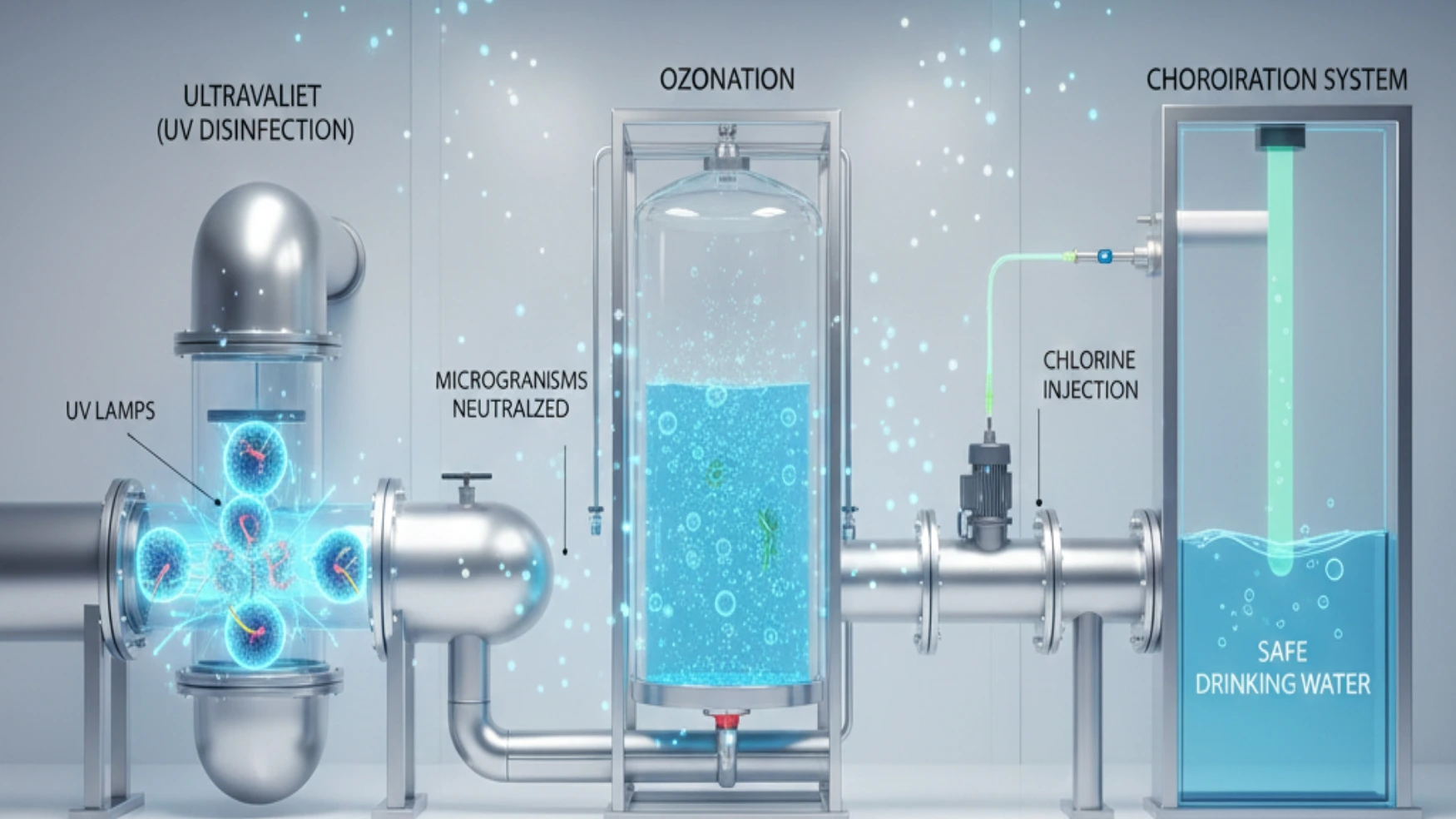
Method 4: Disinfection in the Drinking Water Treatment Process
Disinfection is essential to eliminate harmful microorganisms and ensure microbiological safety.
Common Disinfection Techniques
Chlorination
Kills bacteria and viruses and provides residual protection during distribution.
Ultraviolet (UV) Disinfection
Uses UV light to inactivate microorganisms without chemicals.
Ozonation
Highly effective in destroying pathogens and improving taste and odor.
Disinfection is a crucial step in the drinking water treatment process, ensuring water safety before consumption.
Method 5: Advanced Oxidation and Specialized Water Treatment Solution
Advanced oxidation processes (AOPs) are used when conventional methods are not sufficient to remove complex contaminants.
Features of Advanced Water Treatment Methods
Removal of Organic Pollutants
Effectively treats pesticides, pharmaceuticals, and industrial chemicals.
High Purification Efficiency
Ideal for challenging water quality conditions.
Specialized Applications
Used in industrial wastewater treatment and high-purity water systems.
These methods complement traditional treatment techniques to deliver superior results.
Clean and Safe Water Solutions by theroplant
At theroplant, we provide end-to-end water treatment solution services, from system design to installation and maintenance. Our expertise ensures that every project delivers consistent water quality and operational efficiency.
Our Water Treatment Services
Custom Design and Manufacturing
Systems engineered based on raw water analysis and usage needs.
Installation and Commissioning
Professional setup ensuring smooth and reliable performance.
Maintenance and AMC Services
Routine servicing, filter replacement, and membrane care.
Upgradation and Retrofit Solutions
Modernizing existing plants for improved efficiency.
Choosing the Right Water Treatment Solution
Selecting the appropriate method depends on several factors.
Key Factors to Consider
Raw Water Quality
TDS levels, microbial contamination, and chemical content.
Water Usage Requirements
Residential, commercial, or industrial demand.
Operational Cost and Efficiency
Energy consumption and maintenance needs.
Regulatory Compliance
Meeting local and international water quality standards.
A combination of multiple treatment methods often delivers the best results.
Environmental Benefits of Modern Water Treatment Solutions
A well-designed water treatment solution supports sustainability and responsible water management.
Eco-Friendly Advantages
Reduced Water Wastage
Optimized systems improve water recovery.
Lower Plastic Consumption
Minimizes reliance on packaged drinking water.
Energy-Efficient Operations
Advanced systems consume less power.
Conclusion
Understanding what are the 5 methods of water treatment helps in selecting the most effective water treatment solution for your needs. From coagulation and filtration to reverse osmosis and disinfection, each method plays a vital role in delivering safe, high-quality water.
For reliable clean and safe water solutions, theroplant offers advanced water treatment plants and professional services tailored for residential, commercial, and industrial applications. Investing in the right water treatment system ensures health, sustainability, and long-term value.
Frequently Asked Questions (FAQs)
Q:What is a water treatment solution?
A water treatment solution is a process or system designed to remove impurities such as bacteria, viruses, chemicals, heavy metals, and suspended solids from water to make it safe for drinking and usage.
Q:Why is a water treatment solution important?
A water treatment solution is essential to protect human health, improve water quality, prevent waterborne diseases, protect appliances from scaling, and support environmental sustainability.
Q:What are the 5 methods of water treatment?
The five common methods of water treatment include:
- Coagulation and flocculation
- Filtration
- Reverse osmosis
- Disinfection
- Advanced oxidation processes
- Each method plays a specific role in the drinking water treatment process.
Q:How does coagulation and flocculation work in water treatment?
In this method, chemicals such as alum are added to water to bind small particles together, forming larger clumps called flocs that can be easily removed during filtration.
Q:What role does filtration play in water treatment?
Filtration removes suspended solids, turbidity, chlorine, and organic impurities from water, improving clarity and supporting clean and safe water solutions.
Q:Why is reverse osmosis considered an advanced water treatment solution?
Reverse osmosis uses semi-permeable membranes to remove up to 99% of dissolved salts, heavy metals, bacteria, and viruses, making it one of the most effective water purification methods.
Q:Where is reverse osmosis water treatment commonly used?
Reverse osmosis systems are widely used in residential homes, commercial buildings, hospitals, hotels, schools, and industrial processes requiring high-purity water.
Q:What is disinfection in the drinking water treatment process?
Disinfection is a treatment step that eliminates harmful microorganisms using methods such as chlorination, UV disinfection, or ozonation to ensure microbiological safety.
Q:What are advanced oxidation processes in water treatment?
Advanced oxidation processes are specialized water treatment methods used to remove complex organic pollutants, pharmaceuticals, and industrial chemicals when conventional treatment is not sufficient.
Q:How do I choose the right water treatment solution?
The right water treatment solution depends on raw water quality, water usage requirements, operational costs, energy efficiency, and compliance with water quality standards.
Q:Are modern water treatment solutions environmentally friendly?
Yes, modern water treatment solutions reduce water wastage, lower plastic bottle usage, and use energy-efficient technologies to support sustainable water management.
Q:What services does theroplant provide for water treatment?
theroplant offers complete water treatment services, including system design, manufacturing, installation, commissioning, maintenance, AMC services, and upgradation of existing plants.
Q:Can multiple water treatment methods be used together?
Yes, combining multiple water treatment methods often delivers the best results by addressing different types of contaminants effectively.


Leave A Comment